For a lot of lifters, deadlift grip strength is the first thing to fail. The back and legs have more in them, but the hands give out and the set ends early. This guide covers why that happens, how to fix it, and when using straps makes sense. A stronger grip also carries over to other pulling movements and general physical capability outside the gym.
As an Amazon Associate, we earn from qualifying purchases. This helps support the site at no extra cost to you.
Why Grip Strength Matters for Deadlifting
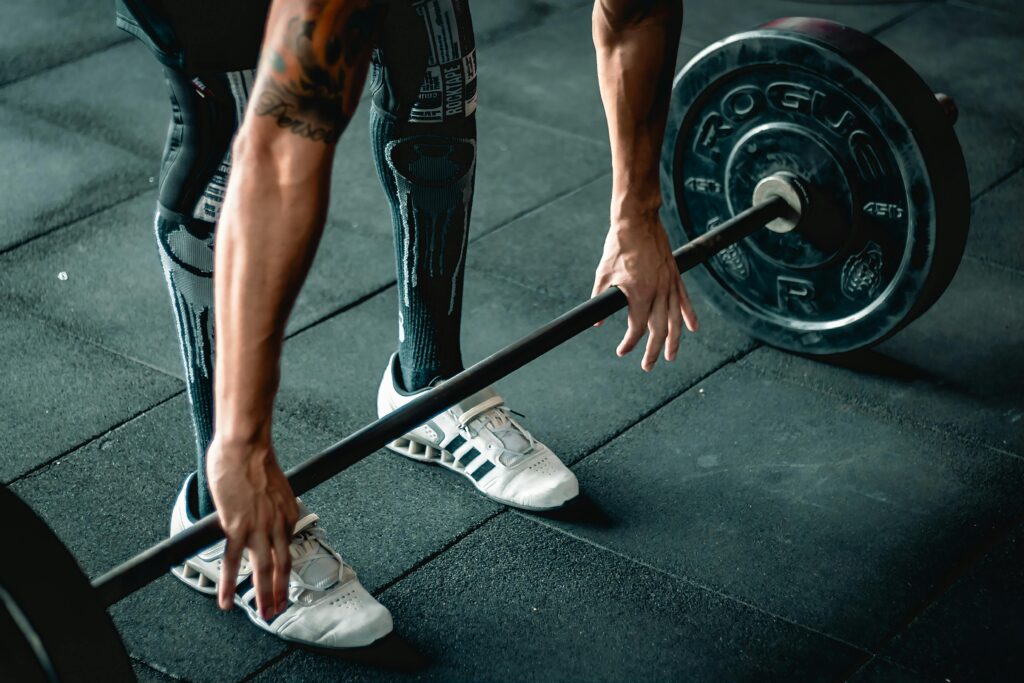
Your grip is often the limiting factor on deadlifts, particularly on higher rep sets, longer holds, or when pushing close to your max. If your hands give out before your back and legs do, you’re not getting the most out of your training.
Beyond deadlifts, grip strength carries over to rows, pull-ups, RDLs, and carries. It also translates outside the gym in ways most lifts don’t. Research has linked grip strength to broader measures of physical function and long-term health, though the relationship is moderate rather than definitive.
The Three Types of Grip
Understanding grip types helps you train smarter:
- Crush grip — closing your fingers against resistance (think grippers)
- Support grip — holding a heavy object for time (like in a deadlift)
- Pinch grip — holding objects by pinching (useful but less deadlift-relevant)
For deadlifting, support grip is the priority. That said, training crush grip through grippers has carryover to support grip, so a well-rounded approach covers both.
Grip Technique: Bar Placement and Hand Position
Before focusing on grip strength training, make sure your technique isn’t already limiting you. Small adjustments in how you hold the bar can make a meaningful difference.
Bar placement in your hand: Don’t let the bar sit deep in your palm. Grip it closer to your fingers, along the callus line or just below it. This gives you a stronger hold and reduces the risk of torn calluses.
Wrap your thumbs hard: Whether using double overhand, mixed, or hook grip, your thumbs should actively wrap and squeeze. Don’t let the bar hang loosely in your fingers.
Set your grip before pulling: Take a moment to grip the bar tightly before starting the lift. Adjusting mid-lift wastes energy and can throw off your positioning.
How to Improve Your Deadlift Grip Strength
Here are the most effective ways to build a grip that lasts:
1. Deadlift Variations Without Straps
Train your deadlift grip strength directly by pulling without assistance:
- Double overhand deadlifts – limits your weight but builds real grip strength
- Snatch grip deadlifts – tough on grip and great for upper back too
- RDLs – long time under tension trains support grip hard
2. Static Holds
Pick up a heavy bar and hold it at the top.
- Use around 80% of your deadlift 1RM
- Hold for 10 to 20 seconds
- Do 2 to 3 sets at the end of your deadlift session
Set the bar on a rack at waist height if you don’t want to pull from the floor each time.
3. Use Grippers (Crush Grip)
Hand grippers like Captains of Crush are well regarded for building crush strength with carryover to support grip.
Start with a manageable level. Guide, Sport, or Trainer are good starting points with no prior gripper experience. Note that the Trainer already requires some grip strength. Do 2 to 3 sets of 5 to 10 squeezes and treat it like strength work, not cardio.
4. Bar Hang Work
Hanging from a pull-up bar trains support grip effectively.
- Hang for 20 to 60 seconds
- Use towel hangs for variety
- Progress to weighted hangs if bodyweight becomes easy
5. Fat Bars and Thick Grips
Training with a thicker bar forces your hands, forearms, and fingers to work harder just to hold on. Even moderate weights become challenging, which makes it an effective way to build support grip.
Fat Gripz attach to a standard barbell or dumbbell and increase the diameter without needing a dedicated fat bar. Use them on rows, curls, carries, or static holds.
Because the difficulty increases significantly, fat grips work best in shorter sets or as finishers rather than on your main lifts.
Why You Should Train Grip, Not Just Work Around It
It’s tempting to reach for straps the moment your grip gives out, and sometimes that’s the right call. But if you always bypass your grip, it won’t improve.
A stronger grip anchors your connection to the bar and improves performance on rows, pull-ups, and carries, not just deadlifts. It also carries over to everyday tasks and physical work outside the gym. In powerlifting and weightlifting competitions, straps aren’t allowed, which means your deadlift grip strength needs to hold up on its own. Even if you don’t compete, training without straps regularly prepares you for that.
What About Mixed Grip and Hook Grip?
If you’d rather not use straps but need help holding onto heavy weights, mixed grip and hook grip are both solid options that still challenge your grip under real load.
Mixed grip has one palm facing you and one facing away, which prevents the bar from rolling out of your hands. It’s the most common grip used by powerlifters for heavy deadlifts and allows you to lift more than double overhand. The downside is potential muscle imbalances or bicep strain on the underhand side if overused. Alternating which hand is over and under helps with this.
Hook grip involves wrapping your thumb around the bar and then wrapping your fingers over your thumb. It’s symmetrical and more secure than double overhand once you’re used to it. The main drawback is thumb pain, especially early on. Tape helps.
Both let you lift heavy without fully relying on straps while still training your grip under load.
Should You Still Use Lifting Straps?
Yes, but selectively. Straps let you train your back and hamstrings harder when your grip gives out before those muscles do. The problem is relying on them for everything, which means your grip never gets enough work to improve.
A simple approach: use double overhand or mixed grip for warm-ups and lighter sets, and save straps for heavy RDLs and high-volume back work. Check out our full guide on lifting straps for more detail.
FAQs
Final Thoughts
A weak grip shouldn’t be what limits your deadlift. Train it directly with static holds, grippers, and bar work, use mixed or hook grip when it makes sense, and save straps for when your grip is genuinely the bottleneck. The gains will follow.