Lifting straps are one of the more divisive accessories in the gym. Some lifters use them on nearly every pulling set. Others refuse on principle, usually citing grip strength. If you’re wondering whether you should use lifting straps, the honest answer is that it depends on what you’re training for and how you’re using them.
As an Amazon Associate, we earn from qualifying purchases. This helps support the site at no extra cost to you.
What are lifting straps?
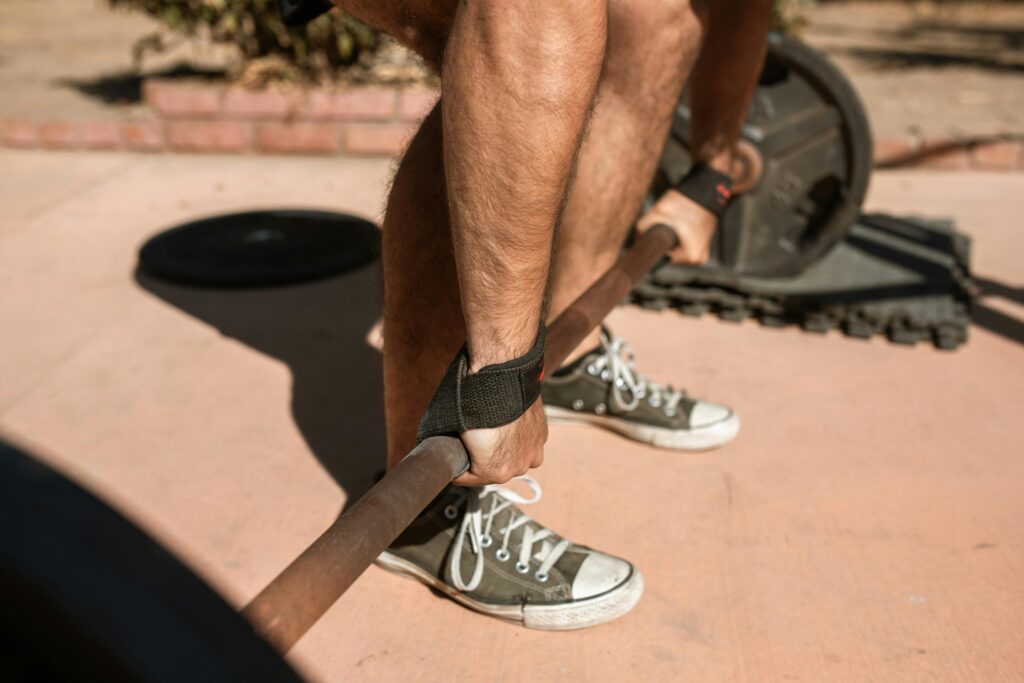
Lifting straps wrap around your wrist and the barbell to help secure your grip when your hands start to give out. They’re most commonly made from cotton, nylon, or leather.
The two types most recreational lifters will encounter are lasso straps and Versa Grips. Lasso straps are the traditional option, cheap, widely available, and reliable once you get the hang of wrapping them. Versa Grips use a different mechanism that makes them faster to get on and off, which some lifters prefer for higher-volume sessions. Figure-8 straps also exist but are mostly used in strongman training. They provide a secure hold and quick setup, but they don’t allow you to easily let go during a lift. This can pose a safety risk, especially if something goes wrong mid-rep.
When Should You Use Them?
Straps are most useful on pulling movements where grip tends to fail before the target muscle does. Deadlifts, Romanian deadlifts, and barbell rows are the most common examples. If your hands are giving out before your back or hamstrings are anywhere near done, you’re cutting the set short for the wrong reason.
They’re also worth using during high-volume sessions where grip fatigue builds across sets and starts affecting rep quality. If you’re returning from a hand or wrist injury and need to keep training, straps can let you do that without making things worse.
The key is using them when they serve a purpose, not as a habit.
When Should You Not Use Them?
Straps aren’t necessary for warm-up sets or any weight your grip can handle without effort. Exercises like farmer’s carries, dead hangs, and other movements specifically intended to train grip are also better done without them. The same goes for any lift where being locked to the bar could be a problem.
If you’re using straps on every set regardless of the weight, your grip will likely fall behind. It doesn’t need a lot of dedicated work, but it does need some.
The Grip Strength Debate
Some lifters avoid straps entirely out of concern that they’ll weaken their grip over time. It’s a reasonable thing to think about. Grip strength carries over to a lot outside the gym, from carrying heavy loads to sports that involve grabbing and holding, and it tends to support performance on other lifts too.
The more accurate framing is that straps don’t inherently cause grip weakness, but overusing them can mean your grip never gets enough stimulus to improve. If you’re using straps selectively on your heaviest sets while still handling plenty of weight without them, your grip is getting trained. If straps are on for every pull from the first warm-up set, that’s a different story.
A simple approach: use straps when the weight demands it, and leave them off when it doesn’t.
Recommended Lifting Straps
If you’re just getting started with straps, lasso straps are the obvious first choice. The Hide & Drink leather lasso straps are a solid option, handmade and built to last longer than the cheap nylon versions you’ll find at most sports stores. There’s a slight learning curve to wrapping them correctly, but once you get it down they’re reliable and comfortable.
Versa Grips work differently and are faster to get on and off, which makes them convenient for sessions where you’re moving between exercises quickly. They’re a bit pricier but have a strong following among lifters who prioritize ease of use.
FAQs
Final Thoughts
Lifting straps aren’t cheating. Just like a belt or good shoes, they’re a tool that serves a specific purpose. Use them when your grip is genuinely limiting your training, leave them off when it isn’t, and your performance will benefit without your grip falling behind.
Want to know how straps compare to chalk? Check out our guide to lifting straps vs chalk.