Compound exercises work multiple muscle groups at the same time, which makes them the most efficient option for building strength and muscle. Whether you’re new to the gym or have been training for years, a program built around compound movements will take you further than one built around isolation exercises. This article covers the best compound exercises worth including in your training.
What makes an exercise compound
A compound exercise is any movement that involves more than one joint and recruits multiple muscle groups simultaneously. A squat, for example, moves through the hip, knee, and ankle joints while engaging the quads, hamstrings, glutes, and lower back all at once. Compare that to a leg extension, which only moves through the knee joint and isolates the quads.
Compound vs isolation exercises
Isolation exercises have their place, but compound movements should form the foundation of most training programs. The main reason is efficiency. You’re training more muscle in less time. A single set of squats touches your quads, hamstrings, glutes, and lower back simultaneously. Achieving the same volume with isolation exercises would take significantly longer.
A narrative review published in Sports Medicine recommends prioritizing multi-joint movements as the base of any time-efficient training program, specifically calling out squats, pull-ups, and bench press.
That doesn’t mean isolation exercises are useless. They’re useful for targeting a muscle that lags behind, rehabbing an injury, or adding volume without taxing the whole body. But if you’re limited on time, compound movements give you more return per set.
The Best Compound Exercises
These are the fundamental movement patterns that most effective training programs are built around. There are plenty of variations for each, but mastering the basics first gives you a foundation to build on.
Back Squat
The back squat is the cornerstone of lower body training. It primarily targets the quads and glutes, with significant involvement from the hamstrings and lower back. Your core works throughout the movement to keep your torso stable under load.
It has a learning curve compared to some other compound movements, but it’s one of the most effective exercises for building lower body strength and muscle mass.
Deadlift
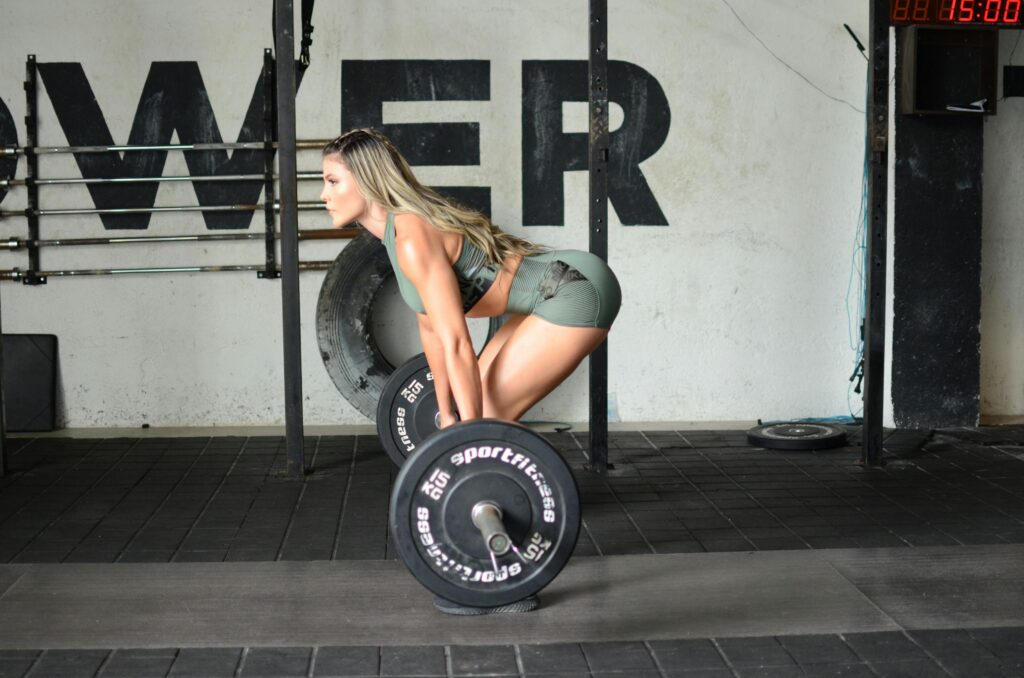
The deadlift is as close to a full body exercise as you can get. It primarily targets the posterior chain, including the hamstrings, glutes, and lower back, but also requires significant contribution from the quads, upper back, traps, and core to keep the bar path tight and the spine neutral.
It’s also one of the best exercises for building raw strength, as it allows you to move more weight than almost any other lift.
Grip is often the first thing that limits progress on the deadlift – see Deadlift Grip Strength for how to address it.
Bench Press
The bench press is the main horizontal pushing movement. It targets the chest, front deltoids, and triceps, with the degree of chest vs. tricep involvement shifting slightly depending on your grip width and bar path.
It’s the most widely used exercise for building upper body pressing strength and chest mass.
If you train alone, it’s worth reading up on how to bench press without a spotter before loading the bar heavy.
Overhead Press
The overhead press is the main vertical pushing movement. It targets the deltoids and triceps, with the upper chest contributing at the bottom of the movement. Done with a barbell standing up, it also requires significant core and upper back engagement to keep the torso stable under load. Overhead press can also be done with dumbbells, sitting down, and on machines. Sitting down and using machines reduces the core stability demand compared to a standing barbell press.
Pull-up / Chin-up
The pull-up and chin-up are the main vertical pulling movements. Both target the lats and biceps, with chin-ups placing slightly more emphasis on the biceps due to the supinated grip. They also engage the rear deltoids and upper back throughout the movement.
For those who can’t yet do bodyweight pull-ups, the lat pulldown is a direct alternative that trains the same movement pattern and muscle groups.
Barbell Row
The barbell row is the main horizontal pulling movement. It targets the upper back, lats, and rear deltoids, with the biceps assisting the pull. The lower back and core also work isometrically to hold the hinged position throughout the set.
It pairs well with the bench press, training the opposing movement pattern and helping to keep the shoulders balanced.
How to program compound exercises
Running all six movements in a single session is a bad idea. Each compound exercise is taxing on its own, and fatigue accumulates fast. By the time you reach the last movement, both your performance and technique will have dropped significantly. A more practical approach is to spread them across two or three sessions per week, with 2 to 3 heavy compound movements per session.
Order within a session
The most important consideration is avoiding work that directly fatigues the muscles a movement relies on before you get to it. Heavy rowing or back work before deadlifts will compromise your pull because the lower back and upper back are already taxed going in. Leg work before squats has the same effect. As a general rule, if you’re squatting or deadlifting that session, keep the movements that load the same structures away from them or do them after.
Squats and deadlifts on the same day is worth thinking about carefully. Both movements are lower body dominant and both are taxing on the lower back and central nervous system. If you’re running a program that has them on the same day, one of them should be treated as the primary movement and the other kept at lower volume or intensity. Trying to go heavy on both in the same session will compromise at least one of them.
Within a muscle group, do the compound before any isolation work. Bench pressing after you’ve already fatigued your chest with flyes means you’ll be weaker on your most important movement. The isolation work comes after.
Progressing over time
For beginners, linear progression is the standard approach: add a small amount of weight each session as long as you’re completing your sets with good form. This works well early on because the nervous system is adapting rapidly and recovery between sessions is fast enough to support frequent progress.
Linear progression doesn’t last forever. Once adding weight every session becomes unrealistic, progress shifts to weekly increments rather than session to session. When even that stalls consistently, it’s usually a sign that recovery, sleep, or nutrition needs attention before adding more volume or intensity. A planned deload can also help when accumulated fatigue is the issue.
For a closer look at how sets and reps factor into your training, see Sets vs Reps: What They Mean for Weight Training.