Heavy pressing puts a lot of stress on the wrist joints. If your wrists bend too far back under load it becomes uncomfortable quickly, and at heavier weights it can limit what you’re able to press. This article covers what wrist wraps for lifting actually do, when they’re worth using, and how to use them correctly.
As an Amazon Associate, we earn from qualifying purchases. This helps support the site at no extra cost to you.
What Are Wrist Wraps?
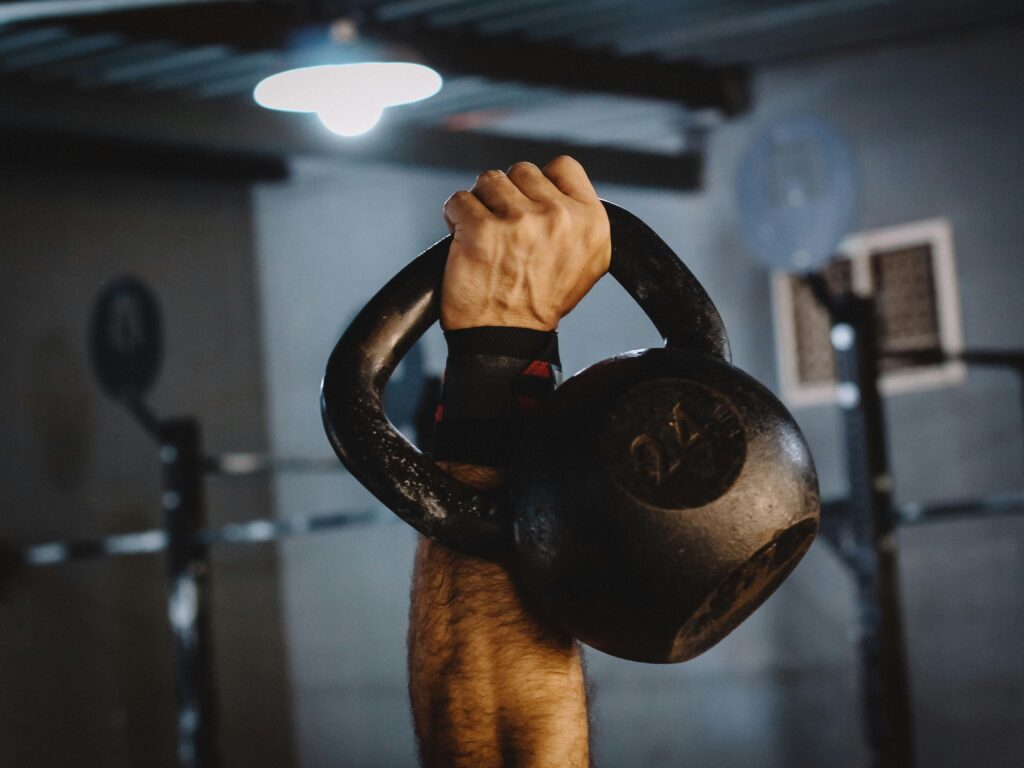
Wrist wraps are long strips of thick, elastic fabric with a thumb loop and Velcro closure. They wrap tightly around the wrist joint to support and stabilize it under load. Lifters typically use them on pressing movements like the bench press and overhead press.
Wrist Wraps vs. Wrist Straps
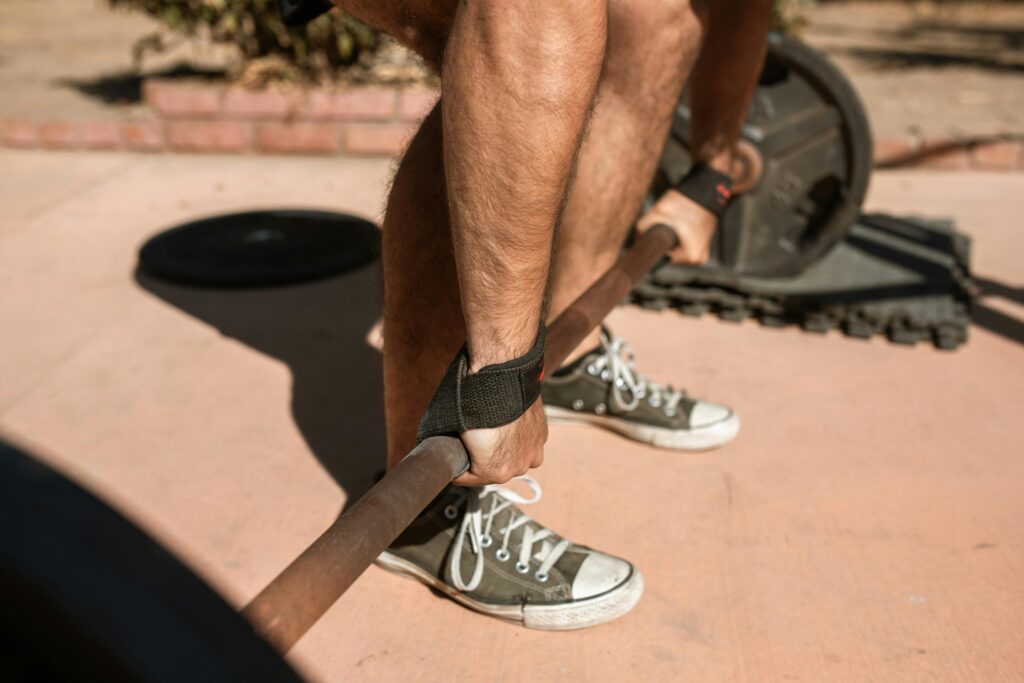
Wrist wraps are often confused with lifting straps. Both wrap around your wrist, but they serve different purposes. Wraps stabilize the wrist joint for pressing movements. Straps loop around the bar to reinforce your grip on pulling movements like deadlifts and rows. If your wrists feel unstable on a heavy press, you want wraps. If your grip is giving out on a heavy pull, you want straps.
What Do Wrist Wraps Actually Do?
When you press heavy weight, your wrists naturally want to bend backward. A small amount of extension is normal, but too much puts stress on the small joints and tendons in your wrist. Over time that can lead to discomfort that limits training.
Wrist wraps reduce excessive backward bend by tightening around the joint, keeping the bar in line with your forearm. This makes the bar feel steadier in your hands and reduces strain on the joint during heavy pressing.
What they don’t do is make you stronger. Wraps remove a potential weak link, but the strength has to be there already.
When to Use Wrist Wraps
Wrist wraps are most useful on pressing movements where the weight sits directly above the wrist joint. Bench press and overhead press are the main ones. They’re less useful for pulling movements, isolation work, or warm-up sets where the loads are manageable without support.
They don’t need to be on for every set. Wraps have to be worn tight to work, which isn’t comfortable for long periods, and they take time to set up. Use them for heavy work sets, not your whole session. If you’re recovering from a wrist injury and can’t train without pain, wraps can help you keep training while the joint settles down.
How to Use Wrist Wraps for Lifting
- Slide your thumb through the loop.
- Position the wrap just above the wrist joint, not halfway up your forearm.
- Wrap tightly around the wrist, pulling snug with each turn and moving slightly up the forearm.
- Secure with the Velcro and remove the loop from your thumb.
The goal is support, not cutting off circulation. Some lifters prefer a slightly looser wrap for general training and a tighter wrap for max attempts.
Best Wrist Wraps for Lifting
Two main factors to consider when buying:
Stiffness: Flexible wraps allow more movement and are more comfortable for general training. Stiffer wraps give maximum support but feel more restrictive. Most lifters start with a medium stiffness wrap and adjust from there.
Length: Shorter wraps (12 to 18 inches) are faster to put on and less bulky. Longer wraps (24 to 36 inches) provide more layers of support but take longer to set up. For most lifters, 18 to 24 inches is a reasonable starting point.
- Gymreapers 18″ Wrist Wraps — IPF approved, 18 inches, solid stretch and support
- Inzer 20″ Iron Z Wrist Wraps — IPF approved, 20 inches, a popular choice among powerlifters
FAQs
Final Thoughts
Wrist wraps for lifting are a straightforward tool. They don’t add strength, but they give your wrists the stability to handle heavy pressing without the joint becoming the weak point. Use them for heavy sets and high-volume pressing, leave them off when the weights are manageable, and build raw wrist strength alongside your lifting.