If you’ve felt discomfort or pain in your knees while squatting more than once, you’ve probably already looked into knee sleeves for squats.
They’re often recommended as an easy way to add support and make squats feel better. You’ll see them in powerlifting and weightlifting competitions, but also in regular commercial gyms. Some lifters use them for entire leg workouts, or even during other sports if they have bad knees.
But do knee sleeves actually help with squats, or are they just a comfort accessory?
Knee sleeves won’t fix bad technique or an injured knee. But for many lifters, the compression and warmth they provide reduce discomfort and make squats feel stronger. Thicker, stiffer sleeves may even give a small rebound out of the bottom of the lift. Personally, I find they also provide a physical cue to reach depth and start pushing.
In this article, we’ll look at what knee sleeves actually do, how much they can affect your squat, and whether they’re worth using in your training.
As an Amazon Associate, we earn from qualifying purchases. This helps support the site at no extra cost to you.
What Knee Sleeves Actually Do
Knee sleeves won’t dramatically increase your squat, but they can make it feel more stable and comfortable.
That comes from three main effects: warmth, compression, and a small amount of rebound.
Warmth
One of the biggest benefits of knee sleeves is simply keeping the joint warm.
Warm joints tend to feel less stiff and more comfortable under load, especially in colder environments. For many lifters, this alone makes squats feel smoother.
Compression
Knee sleeves apply constant pressure around the knee joint.
This doesn’t lock your knee in place, but it can make it feel more stable during the movement. Many lifters notice better control at the bottom of the squat and more confidence when handling heavier weights.
Rebound
Thicker, stiffer sleeves (especially 7mm neoprene) can provide a small amount of rebound out of the bottom of the squat.
As you descend, the material stretches slightly. When you drive back up, it helps return some of that energy.
It’s nowhere near the effect of knee wraps, but it can still make the lift feel a bit easier, particularly in the hole.
What They Don’t Do
It’s worth being clear about what knee sleeves don’t do.
They won’t fix poor technique or solve underlying knee issues. If something in your squat is off, sleeves might make it feel better, but the problem is still there.
Knee sleeves can let you push heavier weights, but if your technique isn’t there, adding more weight is a recipe for disaster.
Do Knee Sleeves Increase Your Squat Strength?
Knee sleeves can help you squat more weight, but the effect is not huge.
They don’t make your muscles stronger. What they do is make heavy squats feel more stable and controlled.
How Much Do They Actually Add?
For most lifters, the difference is fairly small.
For beginners, it can be difficult to tell. Strength levels change quickly at that stage, and it’s hard to separate real progress from the effect of equipment. Technique, general strength, and nervous system adaptation matter far more than knee sleeves.
Intermediate and more experienced lifters usually see a small boost, often in the range of 5 to 10 kilos (~10 to 20 lbs), sometimes even more.
Where the Difference Comes From
The extra weight doesn’t come from one single factor. It’s a combination of small advantages.
Knee sleeves mainly improve comfort and how stable the lift feels. Apart from the small mechanical help of stiffer sleeves, most of the difference is in your head. The added confidence makes it easier to handle heavier weights.
It’s More About Consistency Than Max Strength
For most lifters, the biggest benefit isn’t adding weight to a one-rep max.
It’s being able to train more consistently without your knees feeling beat up. If squats feel better, you’re more likely to push your sets and train without holding back.
Over time, that matters more than the small boost you might get from the sleeves themselves.
Are Knee Sleeves Worth It?
Knee sleeves aren’t essential for everybody, but for many lifters, they’re worth it. If they make your workouts more enjoyable, that alone can be enough to justify using them.
Powerlifting
For powerlifters, knee sleeves are almost standard equipment.
Heavy squats put a lot of stress on the knees, and even small improvements in comfort and stability can help. Paired with a good lifting belt, knee sleeves are part of the standard kit for most competitive powerlifters.
Weightlifting
In weightlifting, knee sleeves are just as common.
Movements like the clean and snatch involve catching weight in a deep squat, often with speed. Because weightlifting relies heavily on technique, even small improvements in stability can help prevent your form from breaking down.
General Gym-Goers
Recreational lifters can benefit just as much, even without lifting maximal weights.
Knee sleeves aren’t just for squats. They can also make movements like leg presses, lunges, and other knee-dominant exercises feel more comfortable under load.
Bottom Line
In the end, knee sleeves aren’t necessary, but if they make training feel better and more consistent, they’re a simple addition that can be worth it.
5mm vs 7mm Knee Sleeves
When choosing knee sleeves, the biggest difference comes down to thickness. Most sleeves are either 5mm or 7mm, and each feels quite different in training.
5mm Knee Sleeves
5mm sleeves are lighter and more flexible.
They’re easier to wear for longer sessions and allow for better mobility. This makes them a good option for weightlifting and general training.
They still provide warmth and some compression, but less support and rebound than thicker sleeves.
7mm Knee Sleeves
7mm sleeves are thicker, tighter, and more supportive.
They’re designed for heavier lifting, especially squats. The added stiffness provides more compression and a slightly stronger rebound out of the bottom.
The downside is that they can feel restrictive and less comfortable for longer sessions or more dynamic movements.
The stiffest 7mm versions are sometimes labeled “powerlifting” or “stiff” knee sleeves. These are built for maximal support in squats and can be uncomfortable to wear for extended periods.
Which One Should You Choose?
For most lifters, the choice is straightforward:
- 5mm → better for general training and overall comfort
- 7mm → better for heavy squats and maximum support
If your main goal is to lift as much as possible in squats, 7mm sleeves are usually the better option.
If you want something you can wear across your whole workout, 5mm sleeves are often the more practical choice.
Knee Sleeves vs. Knee Wraps
Knee sleeves and knee wraps are often mentioned together, but they’re quite different pieces of equipment designed for different purposes.
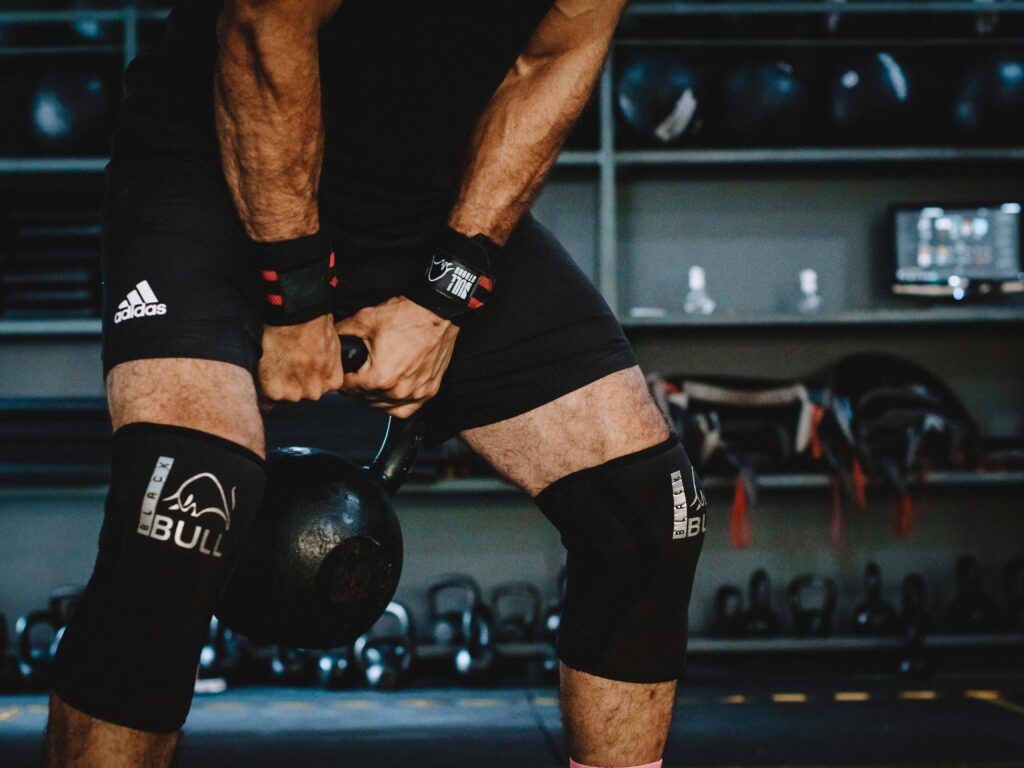
Knee sleeves are made from neoprene and slide over the knee. They provide warmth, compression, and a small amount of rebound. They’re used in both raw and equipped powerlifting, weightlifting, and general gym training.
Knee wraps are long elastic bands that you wind tightly around the knee before a heavy squat. They store significantly more energy than sleeves and release it explosively out of the bottom of the lift. They are mostly used in equipped powerlifting where they are allowed.
For the vast majority of lifters, knee sleeves are the right choice. Wraps are a specialist tool for equipped powerlifting, not practical for regular training sets.
Recommended Knee Sleeves
- Iron Bull 7mm Knee Sleeves – A stiff, heavy-duty sleeve built for maximal squats. IPF-approved and a popular choice among powerlifters.
- Gymreapers 7mm Knee Sleeves – Solid 7mm support at a great price point. IPF-approved and well suited for heavy lifting.
- Gymreapers 5mm Knee Sleeves – A more flexible option, ideal for weightlifting and general strength training.
FAQs
Final Thoughts
Knee sleeves are a simple, affordable addition to your training kit. They won’t transform your squat overnight, but if they make heavy training feel better and more consistent, they’re worth it. If you’re unsure where to start, any of the options above are solid choices for most lifters.