Unlike squats, where a raised heel can actually help, deadlifts reward footwear that keeps you as close to the floor as possible. The best deadlift shoes share a few simple traits: flat, thin, and stable.
The wrong shoes can actually hurt your pull. A thick, cushioned sole puts you further from the floor and creates an unstable base to push against. The right footwear keeps you low, stable, and connected to the ground.
In this article, we’ll cover what makes a good deadlift shoe, the best dedicated options available, and whether flat sneakers or even barefoot deadlifting might work just as well for you.
As an Amazon Associate, we earn from qualifying purchases. This helps support the site at no extra cost to you.
What to Look for in a Deadlift Shoe
The requirements for a good deadlift shoe are actually pretty simple. You want something flat, thin, and stable — that’s about it.
Sole thickness The thinner the sole, the closer you are to the floor. This shortens the range of motion slightly and gives you a more stable base to push against. Even a centimetre of extra cushioning can make a difference when you’re pulling near your max.
Heel drop Zero heel drop is ideal. A raised heel shifts your weight forward and changes the mechanics of your pull — fine for squats, not ideal for deadlifts. Flat is always better here.
Stability Soft, compressible soles absorb force rather than transferring it. You want a firm, non-compressible sole so the force you generate goes into the bar, not into your shoes.
Lateral support is less of a concern for deadlifting than it is for squats. Since you’re pulling straight up rather than moving through a range of motion, a minimal shoe with little structure works just fine.
Best Deadlift Shoes
Dedicated deadlift shoes are built specifically with pulling in mind. Flat, firm, and low to the ground. Here are some of the best options available.
MANUEKLEAR Deadlift Shoes — A purpose-built deadlift shoe at an affordable price. Zero drop, thin sole, and velcro straps for a secure fit. A solid choice if you want a dedicated pulling shoe without spending a lot.
Adidas The Total — Not marketed as a deadlift shoe, but one of the best options for pulling regardless. Extremely flat, thin sole and zero heel drop make it ideal for deadlifts. Also versatile enough to use across your whole training session.
Flat Sneakers That Work for Deadlifting
You don’t need dedicated deadlift shoes to pull well. A flat sneaker with a thin, firm sole can work quite well for most lifters.
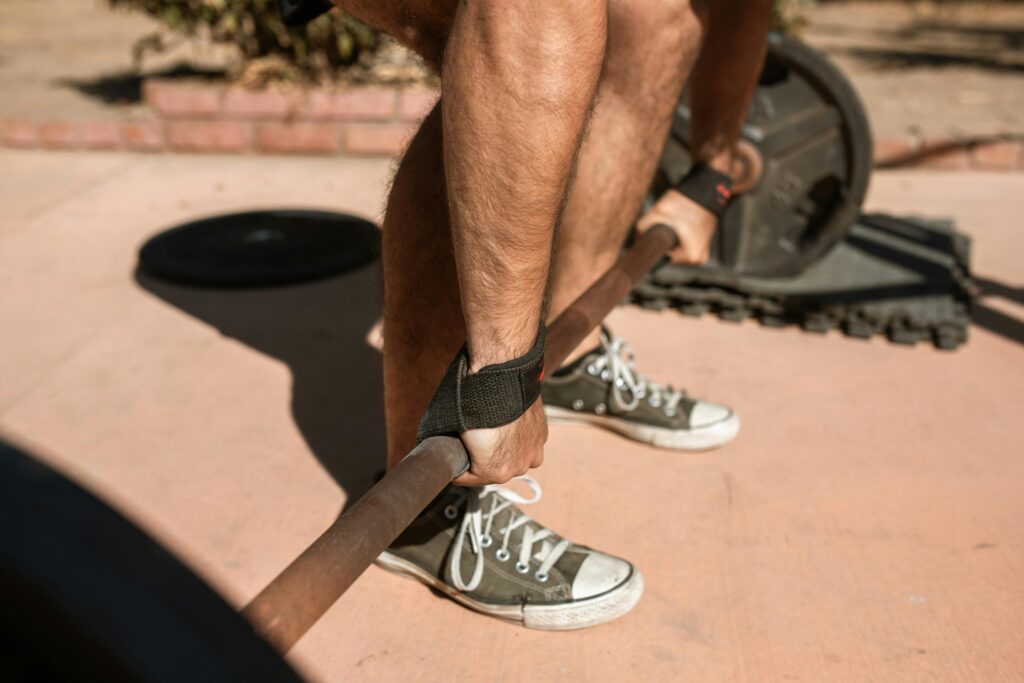
Converse Chuck Taylors are the classic choice among lifters. They’ve added some cushioning over the years but the sole remains flat and firm enough for deadlifting. Affordable, widely available, and they double as everyday shoes.
That said, if you want a shoe that works across your whole training session including squats, Chucks aren’t necessarily the best option (although some people still swear by them). Something with a bit more lateral support and stability will serve you better for more dynamic movements.
Deadlifting Barefoot
Deadlifting barefoot is actually a solid option. No sole means zero distance between you and the floor, and your foot can grip the ground naturally without any compression underfoot.
The main limitations are practical. Many gyms don’t allow it for hygiene and safety reasons, and most federations require footwear in competition. If your gym allows it and you’re not competing, pulling barefoot is a perfectly legitimate choice. It’s especially common for those deadlifting at home where there are no rules to worry about.
What to Avoid
The worst shoes for deadlifting are thick, cushioned running shoes. They put you further from the floor, compress under load creating an unstable base, and can actually change the mechanics of your pull. If you’ve ever wondered why a heavy deadlift felt off, your shoes might be part of the problem.
Elevated heels are worth thinking about. Weightlifting shoes are excellent for squats precisely because of the heel raise, but that same elevation changes your pulling mechanics on the deadlift. Most lifters pull better flat. That said, some experienced lifters do pull in weightlifting shoes successfully, so it’s not a hard rule, just something to be aware of when choosing your footwear.
As a general rule, if a shoe is designed for comfort and impact absorption, it’s not designed for deadlifting.
FAQs
Final Thoughts
The best deadlift shoes share a few simple traits — flat, thin, and stable. Whether that’s a dedicated deadlift shoe, a pair of Chucks, or no shoes at all comes down to your training environment and personal preference.
If you want a dedicated option, any of the picks above are solid choices. If you’d rather not invest in separate lifting shoes, a flat sneaker works just fine for most lifters.
Whatever you choose, avoid thick cushioned soles and leave the running shoes for running. And if you’re dialling in your deadlift setup, don’t overlook your grip — check out our guide on deadlift grip strength next.