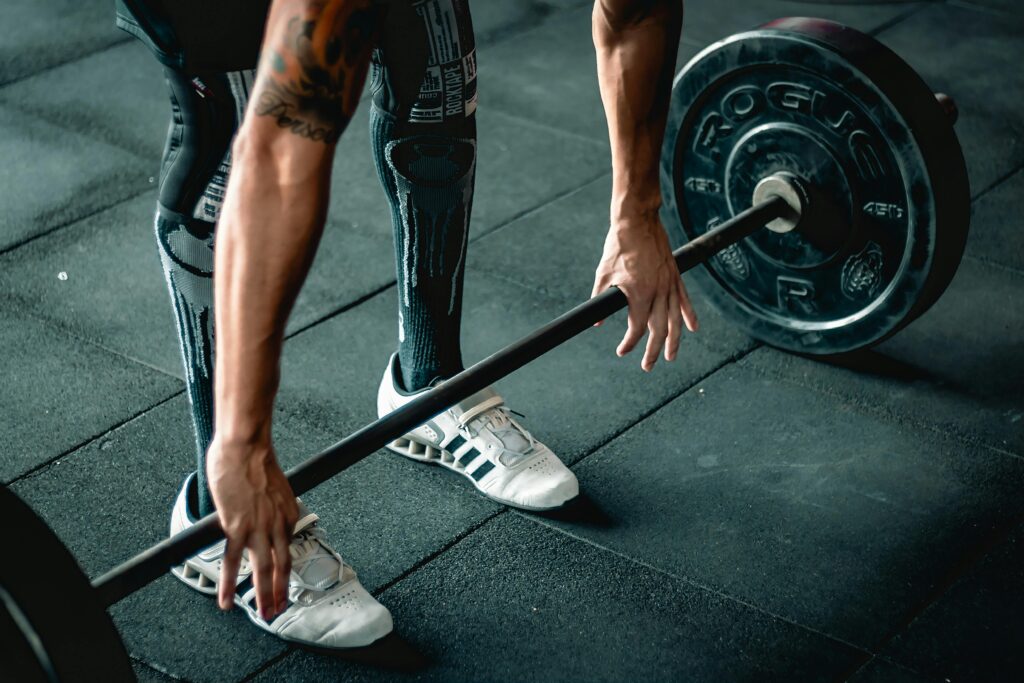
The best deadlift variations each serve a different purpose. Some target specific parts of the pull, others address technique, and some shift emphasis to different muscle groups. Knowing which to use and when makes them far more useful than just rotating exercises for the sake of it.
This article covers the most useful deadlift variations, what each one trains, and where it fits in a program.
The Foundation: Conventional and Sumo Deadlift
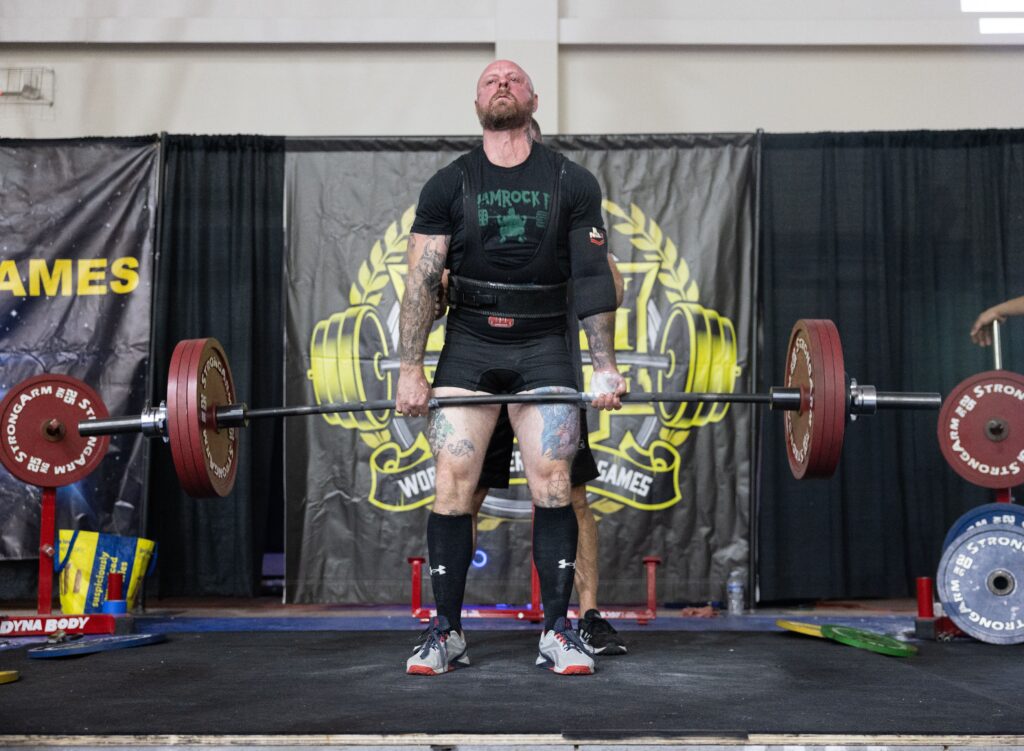
The conventional and sumo deadlift are the two main versions of the lift that most variations are built around.
In the conventional deadlift, you stand with a hip-width stance and grip the bar just outside your legs. The more forward torso position places greater demand on the spinal erectors off the floor compared to sumo.
The sumo deadlift uses a wide stance with the feet turned out and the hands gripping inside the legs. The more upright torso position reduces spinal erector demand but places significantly more load on the quads compared to conventional.
Which one you use as your main lift comes down to individual mechanics and preference. The variations covered in this article apply to both unless otherwise noted.
Deadlift Variations
The following variations can be added to your training alongside your main deadlift to target specific weaknesses, reinforce technique, or add volume in a different movement pattern.
Deficit Deadlift
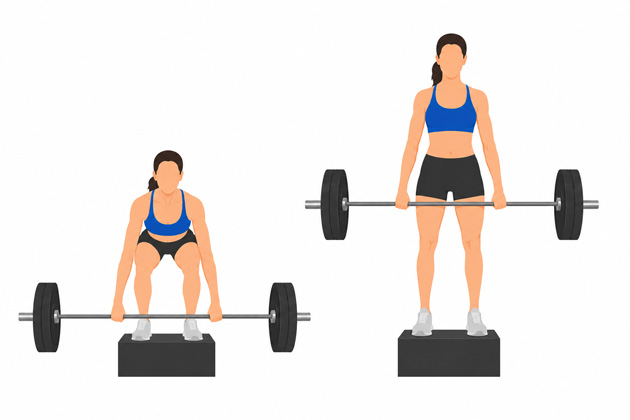
The deficit deadlift is performed by standing on a small platform or weight plate, typically 1-4 inches high. The elevated starting position lowers your hips relative to the bar, increasing the range of motion through which you have to pull.
The main use case is strengthening the bottom portion of the pull. If your deadlift tends to break down off the floor, deficit work targets exactly that position. The increased range of motion also makes it a useful tool for building hamstring strength and improving hip mobility over time.
Keep the deficit small. A larger platform does not mean more benefit and starts to compromise the ability to maintain a neutral spine at the bottom.
The deficit deadlift is typically performed conventional style. The wider stance of sumo makes it difficult to set up correctly from an elevated position.
Paused Deadlift
The paused deadlift is a conventional or sumo deadlift with a deliberate stop at a specific point in the lift, most commonly for 1 to 2 seconds just a couple of inches off the floor. The pause eliminates momentum and forces you to maintain tension and position under load.
The main use case is technique work. If you lose your back position or your hips shoot up at a specific point in the pull, pausing at that position teaches you to stay tight through it. It is also useful for building strength at the sticking point since you cannot rely on bar speed to carry you through.
Use lighter weights than your regular deadlift. The pause removes any bar momentum you might otherwise carry through that portion of the lift, making it significantly harder than it looks.
Rack Pull / Block Pull
The rack pull and block pull are the same movement performed from a raised starting position, typically just below knee height. The difference is setup: rack pulls use the pins of a power rack, block pulls use blocks or any other stable surface to elevate the bar. Blocks are generally the preferred option as they are easier on the barbell.
Because the bar starts higher, the range of motion is shorter and you can typically handle more weight than in a regular deadlift.
The main use case is overload work for the top portion of the pull. If your lockout is a weak point, this variation lets you train that range with heavier loads than your full deadlift allows. They are also useful for building upper back and grip strength due to the demands of holding and locking out heavier loads in a shortened range.
Banded and Chain Deadlifts
Banded and chain deadlifts are both forms of accommodating resistance. The load increases as you move through the lift, meaning the weight is lighter off the floor and heavier at lockout.
Bands attach to the bar and anchor to the floor, rack or under your feet. Chains drape over the bar and pile on the floor at the bottom of the lift, reducing the load, then lift off as you stand, increasing it.
The main use case is lockout strength. The increasing resistance through the lift means the top portion is loaded more heavily than with straight weight, which makes it useful if that is where your pull tends to stall.
Snatch Grip Deadlift
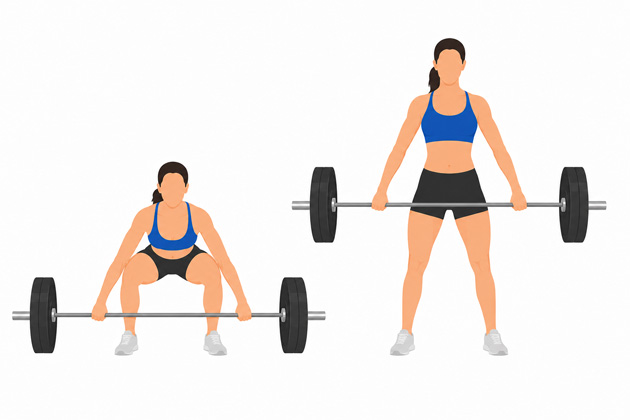
The snatch grip deadlift is a conventional deadlift performed with a much wider grip, similar to the grip used in the Olympic snatch. The wider hand position lowers your hips at the start and increases the range of motion, making it a more demanding pull than the conventional deadlift at the same weight.
The main use case is upper back and trap development. The wide grip places the upper back under significant load throughout the pull, and the increased range of motion adds extra hamstring work at the bottom.
How to Do It
- Stand with feet at roughly conventional width or slightly wider
- Take a wide grip so that the bar sits at around hip crease height at lockout
- Your hips will sit lower than in a conventional deadlift due to the wider grip
- Brace your core
- Pull the bar close to your body throughout the lift
- Lock out at the top
The wide grip makes this variation particularly demanding on your grip. If your hands are giving out before your back is done, lifting straps are worth using here.
SLDL and RDL
The stiff leg deadlift and the Romanian deadlift are the two main hip hinge variations that target the posterior chain with a greater emphasis on the hamstrings and glutes than the conventional deadlift.
The SLDL starts from the floor like a conventional deadlift but with higher hips and less knee bend. Each rep begins from a dead stop, which gives it a stronger concentric bias and makes it more relevant for carryover to the conventional deadlift.
The RDL starts from a standing position and the bar never touches the floor. The emphasis is on the eccentric or lowering phase, which makes it a more practical choice for hamstring and glute hypertrophy.
For a full breakdown of both movements including how to perform them, see our guide to the stiff leg deadlift vs RDL.
Which Variation Should You Use?
The right variation depends on where your deadlift needs work.
If the floor is your sticking point, deficit deadlifts and paused deadlifts both target that range. The deficit increases the range of motion to build strength from a deeper position, the paused version forces you to stay tight at the specific point where you tend to lose it.
If lockout is the weak point, rack pulls and block pulls let you overload that portion of the lift with more weight than your full deadlift allows. Bands and chains serve a similar purpose by adding load progressively through the lift.
If you want to add posterior chain volume without grinding the same pattern, the RDL is the most practical option. The SLDL is a better choice if you want something that carries over more directly to the conventional deadlift.
If upper back development is the goal, the snatch grip deadlift is the most direct option.
Final Thoughts
Deadlift variations are most useful when you know why you are using them. Rotating through variations for the sake of variety adds complexity without much benefit. But picking one or two that address a specific weakness or training goal and running them consistently is a different story.
Most lifters will get the most out of keeping their main deadlift as the priority and using one variation as a supplemental movement. Which one depends on where your pull needs work.