The best squat variations each serve a specific purpose. Some build strength in a particular part of the movement, others shift the load to different muscle groups, and some are useful when you need to train around a limitation. Knowing which variation to reach for and why makes them far more useful than just adding variety for its own sake.
This article covers the most useful squat variations, what each one trains, and where it fits in a program.
The Foundation: High Bar and Low Bar Squat
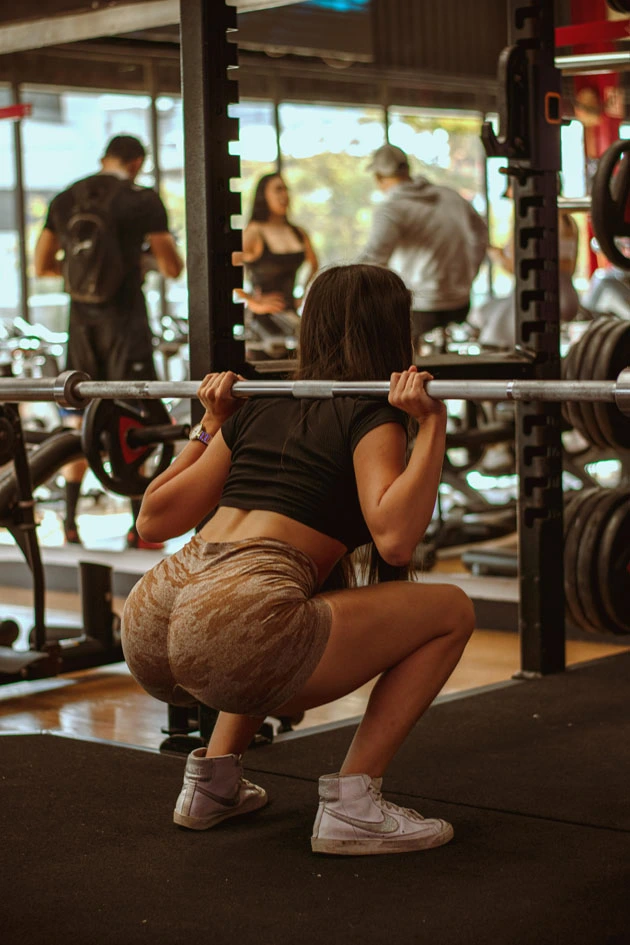
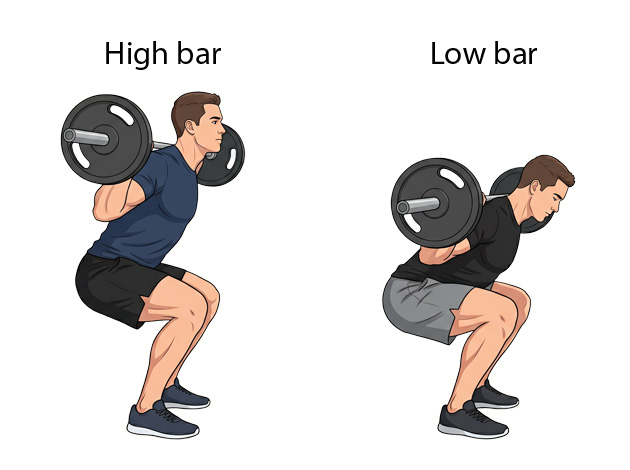
The high bar and low bar squat are two of the most effective compound exercises you can do for lower body strength and muscle, and the two main barbell squat positions that most variations are built around.
In the high bar squat, the bar sits on the upper traps, which encourages a more upright torso and places more demand on the quads. It is also the receiving position for the clean and snatch in Olympic weightlifting, which is why it tends to be the default for weightlifters.
In the low bar squat, the bar sits lower on the rear delts, which allows the torso to lean forward more. This shifts more load onto the posterior chain and is the more common position in powerlifting due to the mechanical advantage it provides.
Which one you use as your main squat comes down to personal preference and goals. If moving the most weight is the priority, low bar generally has the mechanical advantage. If you prefer a more upright position or train for Olympic weightlifting, high bar is the natural choice.
Squat Variations
The following variations can be added to your training alongside your main squat to target specific weaknesses, build muscle in different ways, or address specific needs.
Front Squat
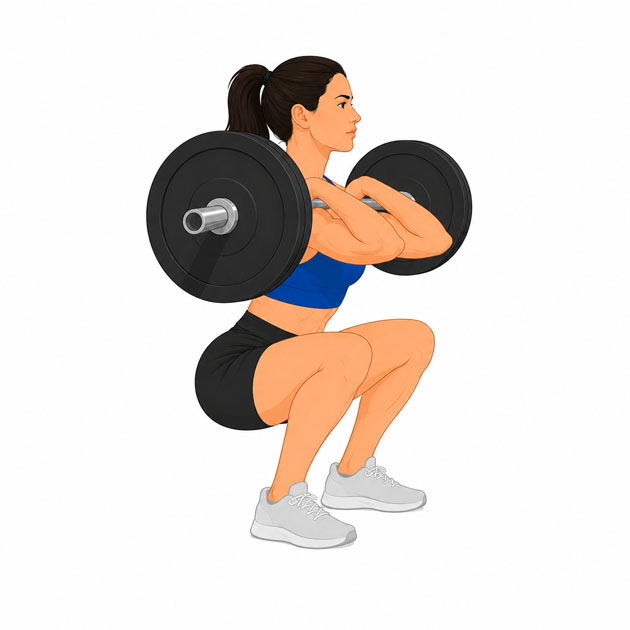
The front squat is performed with the bar resting across the front of the shoulders in the front rack position, with elbows driven high. The bar position forces a more upright torso than any back squat variation, placing greater emphasis on the quads.
The front rack position is where most people struggle. The bar needs to rest on the shoulders with the elbows high, which requires wrist flexibility to achieve and core strength to maintain under load. For most people, the limiting factor in the front squat is holding the rack position rather than leg strength.
It is a useful variation for quad development, building the core strength needed to hold a rigid torso under heavy load, and for those who train Olympic lifting since the bottom position mirrors the receiving position of the clean.
Pause Squat
The pause squat is a squat with a deliberate hold at the bottom of the movement, typically for 1 to 3 seconds. The pause eliminates the stretch reflex and forces you to maintain tension and position under load before driving back up.
The main use case is building strength out of the bottom position. If the hole is your sticking point, pausing there removes the ability to rely on the stretch reflex and forces you to develop the strength to stand up from a dead stop. It also reinforces good positioning since there is nowhere to hide a technique breakdown when you are holding the bottom for multiple seconds.
Use lighter weights than your regular squat. The pause makes the lift significantly harder than it looks.
Tempo Squat
The tempo squat is a squat performed with a controlled, prescribed speed throughout the movement. The most common approach is a consistent pace both on the way down and on the way up, sometimes with a pause at the bottom. Rather than lifting at a natural pace, you count seconds through each phase – for example, 3 seconds down, 1 second pause, 3 seconds up.
The main use case is reinforcing technique. A controlled descent forces you to stay in position throughout the full range of motion and makes it harder to mask poor position with momentum.
Like the pause squat, use lighter weights than you would for a regular squat.
SSB Squat
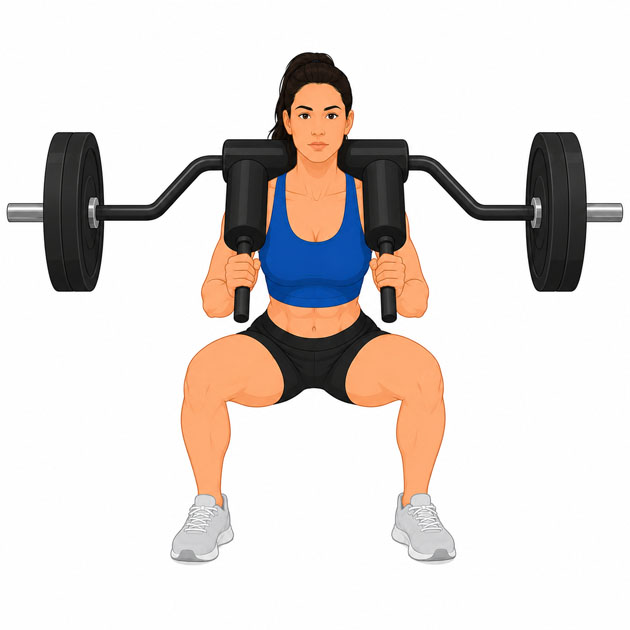
The safety squat bar (SSB) is a specialty barbell with a padded yoke that sits on the traps and cambered arms with handles that extend forward. Unlike a straight barbell, it does not require the same degree of shoulder or wrist mobility to hold, making it accessible for lifters with upper body limitations.
The cambered design shifts the weight slightly forward, which produces a more upright torso position than a straight bar squat. Research suggests long-term strength adaptations are similar to barbell squats, making it a practical substitute when shoulder or wrist issues make a straight bar uncomfortable.
Beyond injury management, it is also useful for adding squat volume without accumulating additional stress on the shoulders and upper back from the bar position itself. For lifters who squat frequently or run high volume blocks, this can make recovery more manageable.
Hack Squat
The hack squat is typically performed on a machine where you stand on a platform with your back against a padded sled, pushing the weight up at an angle. Unlike barbell squat variations, the machine guides the movement path and supports the back, removing much of the stability and core demand.
The fixed path and back support mean you can focus load almost entirely on the legs. The machine positions the feet in front of the body, which encourages a more upright torso and places significant emphasis on the quads. Foot position on the platform can be adjusted to shift emphasis slightly, with a lower foot position generally increasing quad involvement.
The hack squat is useful for adding quad volume without the spinal loading of a barbell squat, and for lifters who want to push leg training intensity without the technique demands of a free weight movement.
Belt Squat
The belt squat is performed with a loaded belt around the hips rather than a barbell on the back. Depending on the setup, the load either hangs freely below the hips requiring an elevated platform, or is attached via a cable or lever system on a dedicated machine.
The key benefit is that the spine is completely unloaded. There is no bar pressing down on the upper body, which makes it a useful option for lifters with back issues who still want to train the squat pattern with significant load. It is also useful for adding squat volume when the lower back or upper body is already fatigued from other training.
The movement pattern is similar to a high bar squat, with a more upright torso and significant quad involvement.
Which Variation Should You Use?
For most lifters, the foundation should be a high bar or low bar squat, with variations added depending on what needs work or what limitations need to be worked around.
For quad development, the front squat, hack squat, and belt squat are the most direct options. The front squat also builds the core strength needed to maintain a rigid torso under load.
For technique work and building strength out of the hole, pause squats address the bottom position specifically. Tempo squats serve a similar purpose, reinforcing technique and body position throughout the full range of motion.
For lifters with shoulder, wrist, or back issues, the SSB and belt squat are the most practical alternatives. The SSB removes the upper body demands of a straight bar, the belt squat removes spinal loading entirely.
For those who train Olympic lifting or want to develop the receiving position for the clean, the front squat is the obvious choice.
FAQs
Final Thoughts
The barbell back squat in either high bar or low bar form is the foundation for most lifters. Variations are most useful when there is a clear reason for including them, whether that is a specific weakness in the movement, a need to manage recovery, or a goal that the main lift does not address as directly. Picking one or two that fit your current training situation and running them consistently will do more than rotating through all of them.