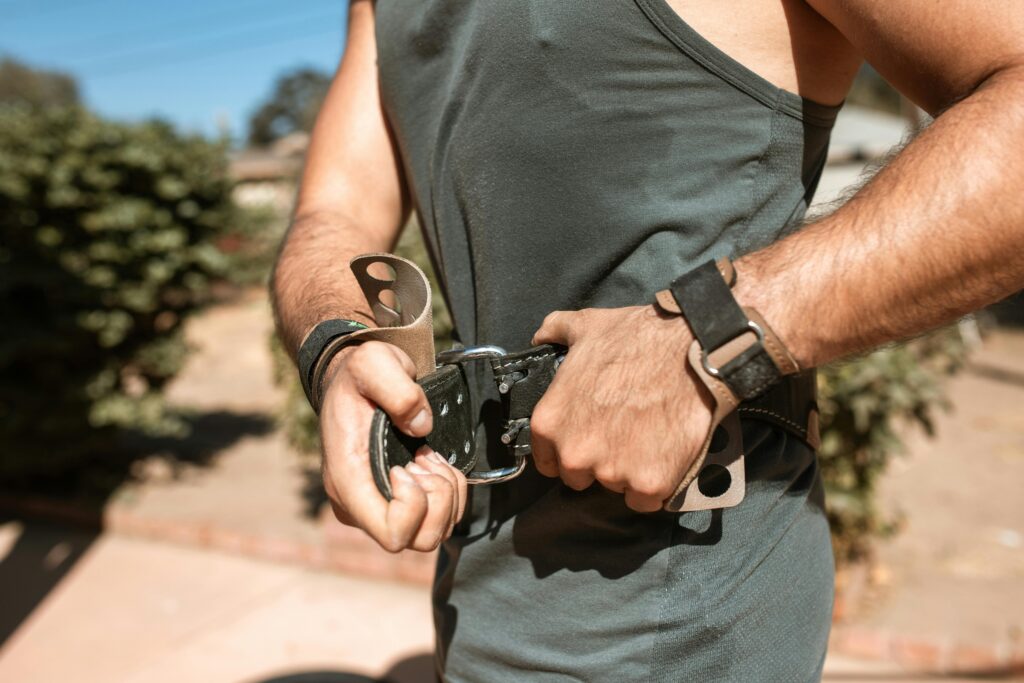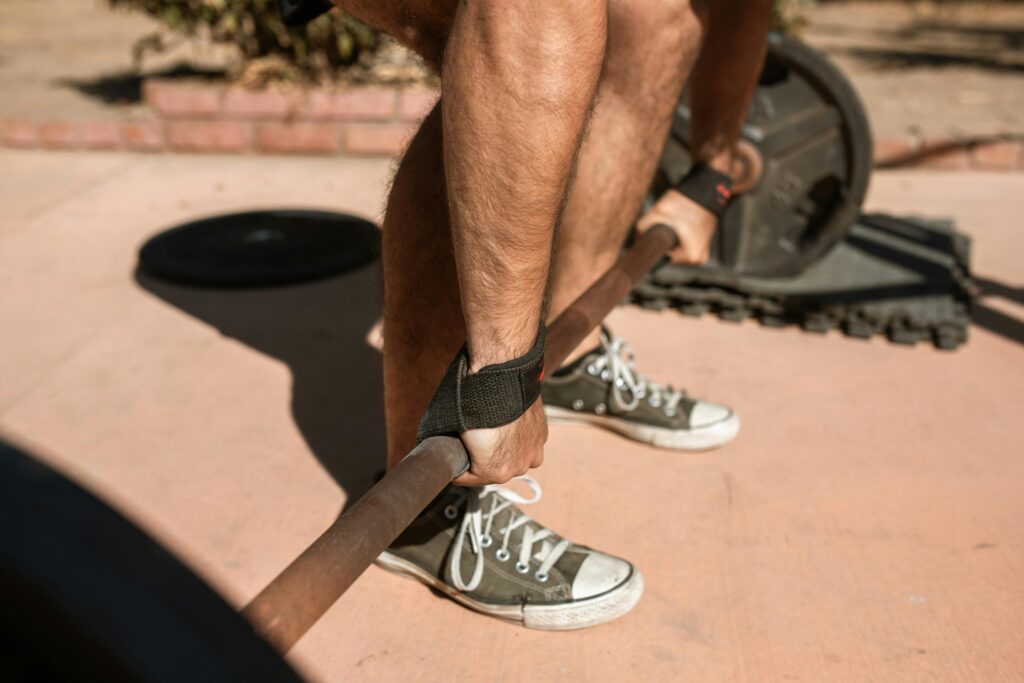
When choosing a lifting belt, the lever belt vs prong belt decision is one of the first you’ll face. Both do the same job, keeping the belt secure during heavy lifts, but they feel and function quite differently in practice.
This guide breaks down the key differences so you can decide which one suits your training.
As an Amazon Associate, we earn from qualifying purchases. This helps support the site at no extra cost to you.
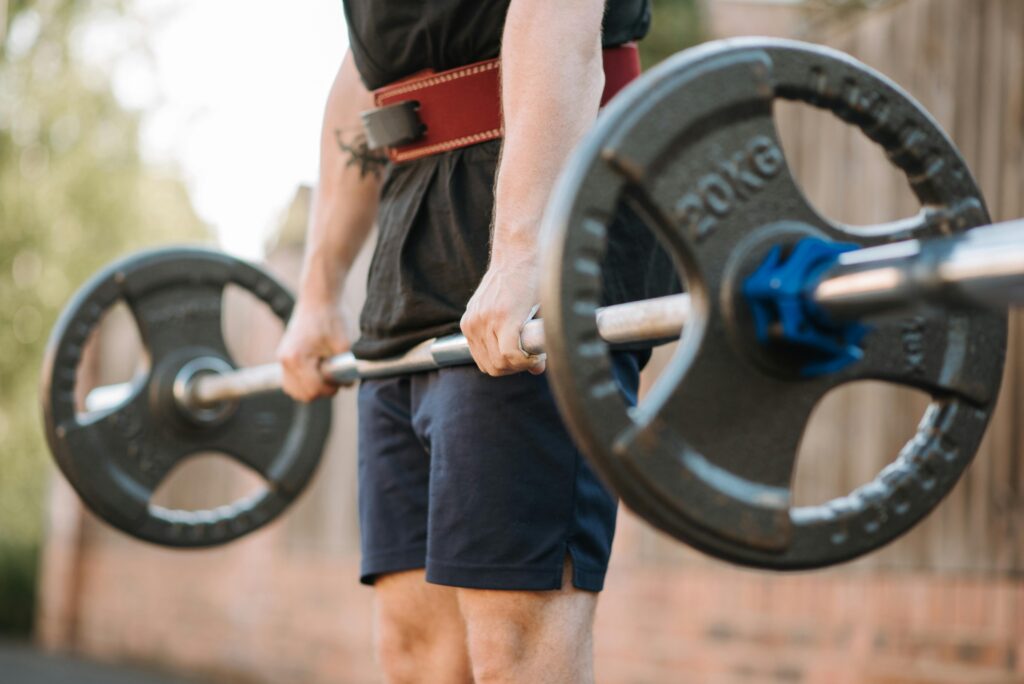
How Each Works
A prong belt fastens like a traditional belt. You thread the end through a buckle and secure it with one or two metal prongs through a hole. Single prong belts use one prong, double prong belts use two. Both work the same way in practice.
A lever belt uses a metal lever mechanism that flips open and closed. On a traditional lever belt you set the lever to your desired tightness by adjusting a screw on the back, then simply flip the lever to lock the belt in place before each set. Lever belts with quick adjustment also exist, which can be adjusted on the fly without a screwdriver.
Ease of Use
This is where lever belts have a clear advantage. Flipping a lever open and closed takes seconds, which makes putting the belt on and taking it off between sets quick and effortless. For powerlifters doing multiple heavy sets, this adds up over a training session.
Prong belts take more effort. Threading the belt and securing the prong can be awkward when the belt is tight, as pulling it to the right tension requires some effort.
That said, most lifters adapt to prong belts quickly and it stops being an issue with practice.
Adjustability
Prong belts win here. With multiple holes along the belt, you can fine-tune the tightness precisely and adjust between sets without any tools. If you want it slightly looser for deadlifts and tighter for squats, that’s easy to do on the fly.
Traditional lever belts are less flexible. Once you set the lever to a specific tightness, changing it requires a screwdriver to adjust the screw on the back. In practice most lifters set it once and leave it, which means the fit has to be dialed in from the start.
Quick adjust lever belts solve this problem, allowing on the fly adjustment without tools, though they tend to cost more than traditional lever belts.
Support and Stiffness
Both lever and prong belts are available in the same thicknesses and materials, so the closure type doesn’t directly affect stiffness or support. A 13mm leather lever belt and a 13mm leather prong belt will feel virtually identical once fastened.
The main difference is that a lever locks completely with no movement once closed. A prong belt has a small amount of play since the belt can shift slightly in the buckle when you brace hard. In practice most lifters don’t notice this, but at maximal weights it can make a difference.
Price
Prong belts are generally the more affordable option. A quality leather prong belt can be found for significantly less than a comparable lever belt.
Lever belts cost more due to the more complex hardware. Traditional lever belts sit at a higher price point, and quick adjust lever belts are typically the most expensive option of all.
That said, both are long term investments — a good leather belt lasts years regardless of the closure type.
Which Should You Choose?
For most lifters, a prong belt is the more practical starting point. It’s more affordable, easier to adjust, and works well across all types of training. If you’re new to belts or train across a variety of lifts at different intensities, a prong belt gives you the flexibility to dial in your fit on the fly.
A lever belt makes more sense if you’re focused primarily on heavy strength work and want the convenience of getting in and out of your belt quickly between sets. Once you’ve settled on your preferred tightness, the lever’s consistency and speed become a genuine advantage in training.
If budget isn’t a concern, a quick adjust lever belt gives you the best of both worlds: lever convenience with prong-like adjustability.
Lever Belt | Prong Belt | |
Ease of use | Easy, flips open and closed | More effort, especially when tight |
Adjustability | Limited (screwdriver may be needed) | Easy |
Support | Identical | Identical |
Price | Higher | More affordable |
Consistency | Locks with no play | Small amount of play in the buckle |
Recommended Belts
- Pioneer 10mm PAL V2 4-Inch Lever — A quick adjust lever belt, allowing on the fly tightness adjustments without tools. Well built and a solid investment for serious lifters.
- Iron Bull 10mm 4-Inch Dual Prong — A reliable leather prong belt at a reasonable price. IPF-approved and well suited for heavy lifting.
FAQs
Final Thoughts
Both lever and prong belts are solid choices for serious strength training. The right one comes down to how you train and what you value.
If you want convenience and train primarily with heavy weights, a lever belt is worth the investment. A quick adjust lever belt gives you the added flexibility of on the fly adjustment if you want the best of both worlds. If you prefer simplicity and a lower price point, a prong belt is the more practical choice.
Either way, the closure type matters less than getting a quality belt that fits your body well. For more on that, check out our guide on weight lifting belt size.