When your hands start slipping off the bar, lifting straps vs chalk is the choice most lifters eventually face. Both help you hold onto the bar more securely, but they go about it differently, and knowing which to reach for makes a real difference in how you train.
This guide breaks down how each works, when to use them, and how they compare so you can make an informed decision for your training.
As an Amazon Associate, we earn from qualifying purchases. This helps support the site at no extra cost to you.

What Is Lifting Chalk?
Lifting chalk is magnesium carbonate. It works by drying the moisture on your palms and increasing friction between your skin and the bar, making it harder for the bar to slip.
It comes in three main forms: block chalk, loose chalk (mostly used in climbing), and liquid chalk. Block is the traditional option you’ll find in most serious gyms. Liquid chalk does the same job in a less messy format, which makes it a better fit for commercial gyms that don’t allow block chalk.
The main downside is mess. Block and loose chalk can leave a fine dust over equipment and the floor, which is why some gyms ban it outright. Liquid chalk is the cleaner alternative in those cases.
Lifting Straps
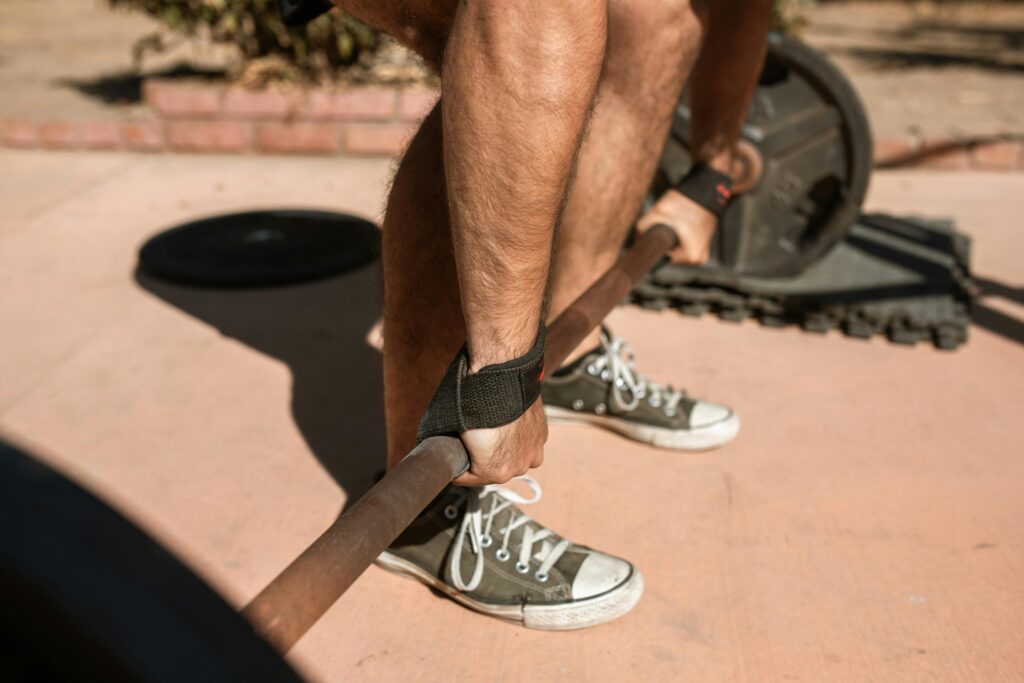
If you’re not familiar with lifting straps, check out our full guide to lifting straps. In short, straps wrap around your wrists and the bar to reinforce your hold. Unlike chalk, they don’t improve friction. They take grip out of the equation almost entirely, letting you pull heavier loads or higher reps without grip being the limiting factor.
When to Use Chalk
Chalk makes the most sense when your hands are sweaty and grip is slipping, but your grip strength itself isn’t the issue. It’s a good fit for moderate weights where you just need a bit more friction to stay secure, and it’s the obvious choice if you compete in powerlifting or Olympic weightlifting where straps aren’t allowed.
It also works well as a default for most of your training, with straps reserved for your heaviest sets or highest volume work.
When to Use Straps
Straps make the most sense when grip is genuinely the limiting factor, not just sweaty hands. If your back or hamstrings still have more in them but your hands are giving out, chalk alone won’t fix that. Straps are also useful when returning from a hand or wrist injury and you need to keep training without putting extra stress on the affected area.
A common approach is to do warm-up and lighter sets without straps, then put them on for your heaviest sets or highest volume work.
The one thing to avoid is reaching for them by default. If straps are on from your first warm-up set regardless of the weight, your grip won’t get enough work to keep improving.
Can You Use Both?
Some lifters use chalk and straps together, chalking up first and then wrapping the straps over. This gives maximum security on very heavy pulls and can be useful if your hands sweat a lot even with straps on. For most recreational lifters though, one or the other is enough.
Competition Rules to Know
In powerlifting and Olympic weightlifting, straps aren’t allowed in competition but chalk is. Strongman generally permits both, though rules vary by federation and event. CrossFit competitions typically allow chalk only.
If you plan to compete, make sure at least part of your training reflects the conditions you’ll face on the platform.
Lifting Straps vs Chalk: Which Should You Start With?
When it comes to lifting straps vs chalk, chalk is the better starting point for most beginners. It lets you develop your grip naturally without relying on something that removes it from the equation entirely. Add straps later once the weights are heavy enough that grip is actually holding you back.
FAQs
Final Thoughts
Both lifting straps and chalk have a place in a well-rounded training setup. Chalk is the simpler option that keeps your grip in the game. Straps are the better tool when grip is genuinely limiting what you can lift. Used together or separately, the right choice depends on what you’re training for and how heavy you’re going.