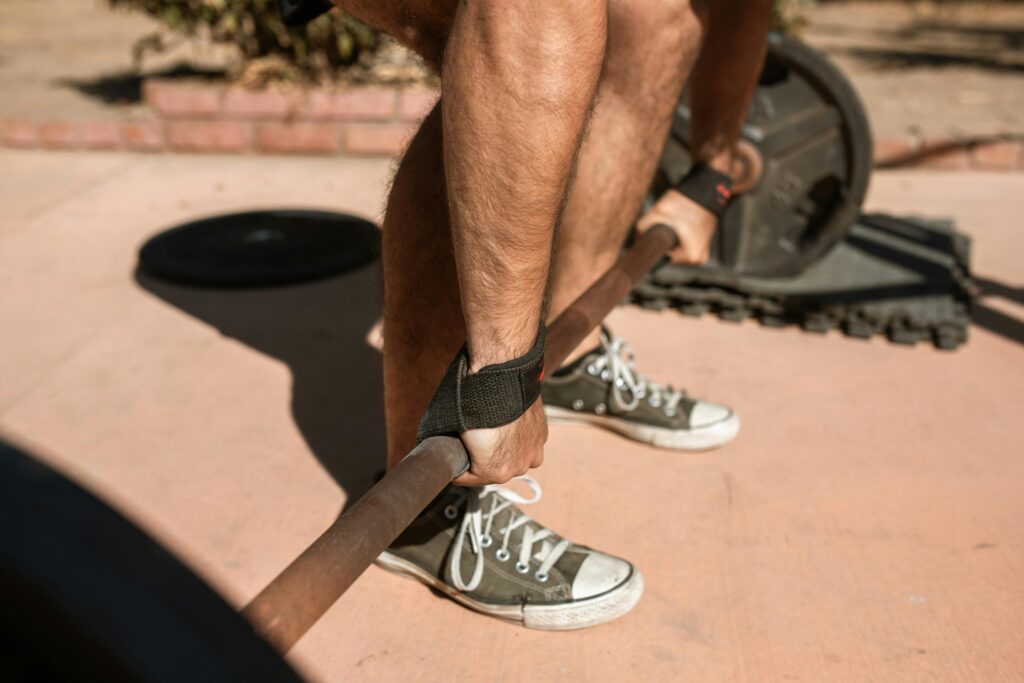
Setting up to deadlift at home doesn’t require much space or a huge budget. A barbell, plates, and some floor protection are the core of it, and you can add accessories as you go. This guide covers everything you need, from the bare minimum to get started to the gear that makes regular training more convenient.
As an Amazon Associate, we earn from qualifying purchases. This helps support the site at no extra cost to you.
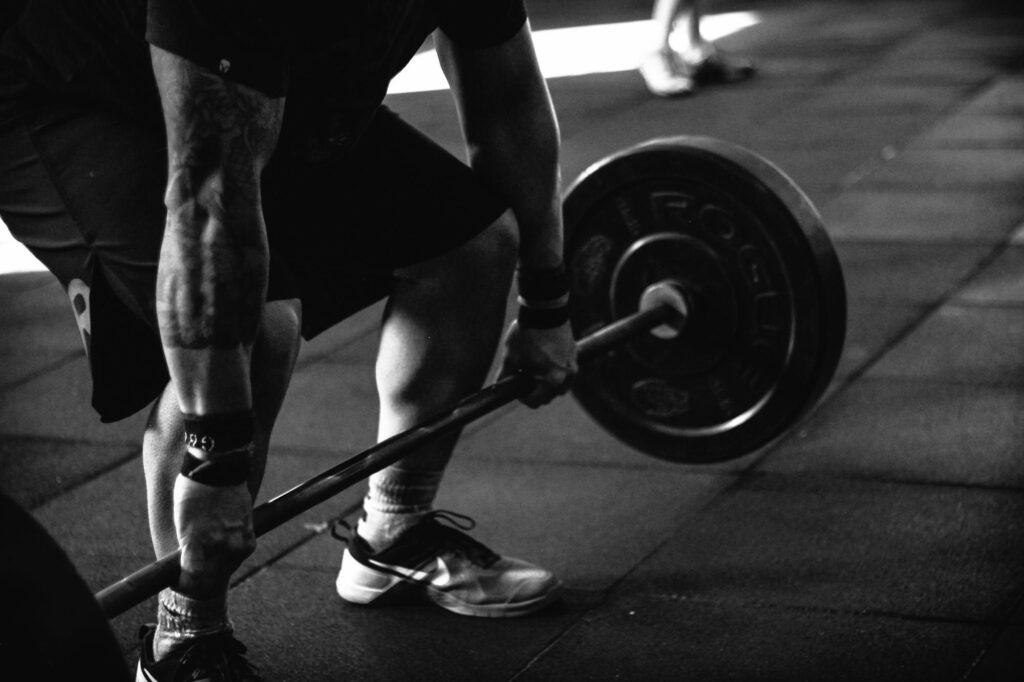
The Core Essentials to Deadlift at Home
1. Barbell
A standard Olympic barbell is your foundation. You’ll want one that weighs 20 kg, has a 28 to 29 mm diameter for a solid deadlift grip, and medium to aggressive knurling. While specialty deadlift bars exist, a power bar or general-purpose Olympic bar will do the job for most lifters.
- Titan Fitness Power Lifting Barbell – versatile, high-quality, rated for 680 kg (1,500 lb)
- CAP Power Bar – a more budget-friendly option
2. Weight Plates
For deadlifts, you want at least a couple of standard size plates to raise the bar to the correct height. If you only have smaller plates, you’ll be performing deficit deadlifts, which is a different movement.
You have two main choices:
- Iron plates — cheaper and durable, but loud and rough on floors
- Bumper plates — quieter, safer to drop, and better for most home setups
Start with 45 lb or 20 kg plates to pull from standard height.
3. Floor Protection
Deadlifts are hard on floors, especially with heavy iron plates. At minimum, rubber mats will do the job. A platform with a plywood base and rubber mats on top adds extra shock absorption if you’re pulling heavy regularly.
- CyclingDeal Tiles – 5/8″ thick high-density tiles
- HAPBEAR Tiles – 0.56″ thick interlocking tiles
If you have a concrete floor you don’t care about, you may not need anything. That said, some kind of mat is still worth having for a level surface and to reduce noise.
4. Barbell Collars
Collars are worth having for deadlifts. When the bar hits the ground, plates shift around, and you don’t want the center of mass moving during your lift. We recommend quick release collars.
5. Deadlift Jack
Not strictly necessary, but a deadlift jack makes loading and unloading plates significantly easier, especially with multiple plates per side.
- Traditional deadlift jack — simple design, foolproof
- Single side deadlift jack — cheaper, but only holds one end at a time
If you don’t want to invest in a jack yet, you can roll one side of the bar with big plates on top of a small weight plate to lift it slightly, making it easier to add plates.
Other Helpful Gear for Your Home Setup
The essentials above are all you need to get started. These additions make training more comfortable and effective as you progress.
Lifting Belt
If you’re training seriously at home, a lifting belt is worth the investment. It provides abdominal bracing feedback and helps with intra-abdominal pressure during heavy lifts. Not sure what kind to get? Check out our guide: Weight lifting belt size: How to choose one for your body.
Chalk
Grip can become an issue, especially in warm garages or humid basements. A bit of lifting chalk goes a long way. Liquid chalk is a good low-mess option. Read more: Lifting Chalk: What It Does and Which Type to Use.
Lifting Straps
If you’re pulling volume or hitting high reps, straps can take grip fatigue out of the equation. Check out our article: Should You Use Lifting Straps? If you’re struggling with grip strength specifically, we have a dedicated article on deadlift grip strength.
How Much Space Do You Need?
An Olympic barbell is roughly 2.2 meters (7.2 ft) long. You won’t be moving much during a deadlift, but you need enough room to load the bar comfortably and move around it.
Minimalist Setup: What If You’re on a Budget?
If you’re looking to deadlift at home on a budget, you don’t need to buy everything at once. A minimalist deadlift setup starts with a secondhand barbell, used iron plates, and a couple of rubber mats. Skip the jack, straps, and belt at first and add them as needed. Used gym equipment from local classifieds or Facebook Marketplace is often significantly cheaper and just as functional.
FAQs
Final Thoughts
Deadlifting at home doesn’t require a lot of space or a big investment to get started. A barbell, plates, and some floor protection cover the basics. Add accessories as your training progresses and your budget allows. For technique guidance, check out this in-depth deadlift guide from Stronger by Science.